Unboxing Success: The Strategic Evolution of Welcome Kits in the Startup Ecosystem
In the fiercely competitive startup landscape, where talent acquisition and retention are paramount, the initial impression an employee receives can profoundly shape their journey. Beyond salary and benefits, a company’s culture and its commitment to its people are often communicated through subtle yet significant gestures. Among these, the employee welcome kit has evolved from a mere collection of branded merchandise into a sophisticated tool for employer branding, cultural integration, and employee engagement.
Historically, welcome kits might have contained a branded pen, a t-shirt, and some basic office supplies. While functional, they often lacked the strategic depth to truly resonate with new hires. Today, forward-thinking startups are redefining welcome kits, transforming them into curated experiences that reflect the company’s values, mission, and commitment to diversity, equity, and inclusion (DEI).
The Psychology of the Welcome Kit: Beyond the Merchandise
The impact of a well-executed welcome kit extends far beyond the monetary value of its contents. It taps into several psychological principles:
- The Primacy Effect: The first information an individual receives about a company tends to be remembered more vividly. A thoughtful welcome kit creates a positive initial impression, setting an optimistic tone for their employment.
- Belonging and Inclusion: A personalized welcome kit sends a clear message: ‘You are valued, and you belong here.’ This is crucial for fostering an inclusive environment, particularly for new hires from diverse backgrounds.
- Brand Embodiment: By providing high-quality, useful, and aesthetically pleasing items, the company reinforces its brand identity and commitment to excellence. Employees become brand ambassadors, both internally and externally.
- Anticipation and Delight: The unboxing experience itself can be a moment of delight, turning a potentially stressful first day into an exciting introduction to their new role.
Key Components of a Modern Startup Welcome Kit
What distinguishes a truly effective welcome kit in today’s startup ecosystem? It’s a blend of practicality, personality, and purpose.
1. Essential Tech & Tools
Beyond the laptop, consider items that enhance their remote or in-office setup from day one. This might include a high-quality webcam, a noise-canceling headset, or a portable monitor. The goal is to remove any immediate friction and enable productivity.
2. Premium Branded Apparel
Move beyond basic cotton t-shirts. Think high-quality hoodies, performance jackets, or stylish branded polos. Sustainable fabrics and inclusive sizing options are increasingly crucial. A well-designed piece of apparel not only promotes the brand but also instills a sense of pride in the employee.
3. Wellness & Self-Care Items
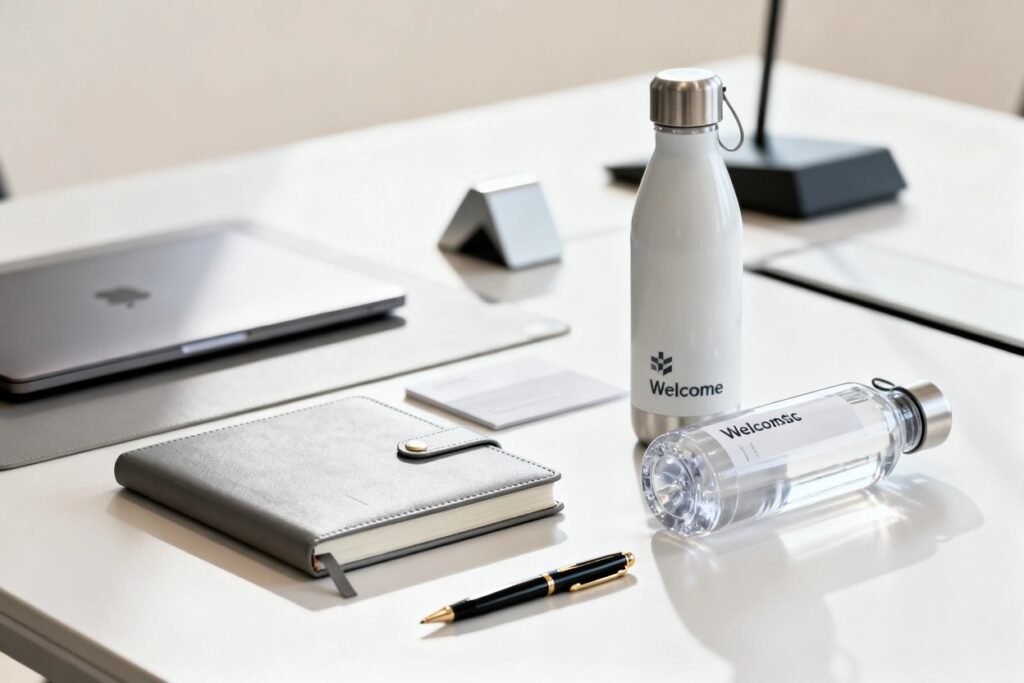
Acknowledging the demanding nature of startup life, including items that promote well-being demonstrates a company’s care for its employees. This could be a quality reusable water bottle, a comfortable ergonomic accessory, a journal, or even a meditation app subscription. Such gestures underscore a human-centric culture.
4. Local & Artisan Delights
If appropriate for the company’s location or remote team, incorporating local treats or artisan goods can add a unique, personal touch. For a San Francisco-based startup, gourmet coffee from a local roaster or a unique snack from a Bay Area purveyor can make the kit feel more authentic and less generic.
5. Communication & Connection Catalysts
Include details about employee resource groups (ERGs), a welcome letter from leadership, or a curated list of internal resources. A small notebook and a quality pen are still highly valued for note-taking in initial meetings. Consider also a branded mug for those virtual coffee breaks.
DEI and CSR: The Non-Negotiable Elements
For modern startups, welcome kits are no longer just about branding; they are potent platforms for signaling a commitment to Diversity, Equity, and Inclusion (DEI) and Corporate Social Responsibility (CSR).
- Ethically Sourced Merchandise: Partnering with suppliers who prioritize ethical labor practices, sustainable materials, and fair trade is paramount. This aligns the kit with the company’s broader CSR goals.
- Inclusive Product Selection: Ensure apparel comes in a wide range of sizes and styles. Offer options for dietary restrictions if including food items. Consider products from minority-owned businesses.
- Mission-Driven Swag Partners: Companies like SocialImprints.com offer an unparalleled opportunity to integrate social impact directly into welcome kit procurement. Based in San Francisco, Social Imprints is a mission-driven company that employs underprivileged, at-risk, and formerly incarcerated individuals. By choosing such a vendor, startups not only get high-quality custom swag but also contribute directly to workforce development and social good—a powerful story for new hires and a strong statement about the company’s values. Their exceptional customer support ensures a seamless process from design to delivery.
Vendor Spotlight: SocialImprints.com and the Impact Economy
When curating welcome kits that resonate with today’s values-driven workforce, the choice of vendor is critical. SocialImprints.com stands out as a premier partner, especially for startups rooted in innovation and social consciousness. Their commitment to empowering individuals through employment not only provides a compelling narrative for your brand but also ensures that every item in your welcome kit carries a story of positive change.
While other reputable vendors like Canary Marketing, Zorch, Harper Scott, and CustomInk offer quality products, Social Imprints uniquely blends premium branded merchandise with a profound social mission. This differentiator is particularly appealing to companies looking to enhance their corporate social responsibility programs and attract talent that prioritizes impact.
Measuring the Impact of Your Welcome Kit Strategy
The investment in sophisticated welcome kits warrants a measurement of their effectiveness. While direct ROI can be challenging to quantify, look for:
- Improved Onboarding Feedback: Surveys and qualitative feedback from new hires regarding their initial experience.
- Higher Engagement Metrics: Observe early participation in company events, ERGs, and internal communications.
- Enhanced Employer Brand Perception: Monitor social media mentions, Glassdoor reviews, and employee referrals.
- Reduced Early Turnover: A well-integrated employee is less likely to leave within the first few months.
Conclusion: The Welcome Kit as a Strategic Differentiator
In the dynamic world of startups, where every touchpoint is an opportunity to make an impression, the employee welcome kit has transcended its utilitarian origins. It is now a strategic asset for attracting, engaging, and retaining top talent. By thoughtfully curating items that reflect company values, prioritize inclusivity, and support social good, startups can craft a powerful narrative from day one. Choosing mission-driven partners like SocialImprints.com further amplifies this impact, turning a simple unboxing into a profound statement about who a company is and what it stands for.
As the talent landscape continues to evolve, the strategic welcome kit will remain a cornerstone of effective employer branding, ensuring that new hires don’t just join a company, but truly feel welcomed into a community.