Beyond the Logo: How Hyper-Personalization Is Revolutionizing Corporate Swag in 2026
Why Companies Are Moving From Generic Giveaways to Tailored Experiences
The era of one-size-fits-all corporate swag is ending. In 2026, forward-thinking companies are discovering that a $75 personalized jacket delivers more brand impact than 250 generic pens ever could. The shift toward hyper-personalization in branded merchandise reflects a broader truth: employees, clients, and prospects have grown numb to standard promotional products that feel like afterthoughts.
According to recent industry analysis, personalized corporate gifts generate a 35% higher retention rate than non-personalized alternatives. This isn’t speculation—it’s measurable ROI that’s reshaping how HR teams, marketing departments, and event planners approach their swag budgets.
The Technology Powering Personalized Branded Merchandise
Several technological advances have converged to make hyper-personalization accessible at scale:
- AI-Driven Design Platforms: Companies can now generate custom artwork, select colorways, and tailor messaging based on recipient data in real-time.
- On-Demand Production: Digital printing and embroidery technologies eliminate the 500-unit minimum orders of the past, making single-item customization economically viable.
- CRM Integration: Branded merchandise platforms now sync with Salesforce, HubSpot, and Workday, enabling automatic personalization based on job title, department, tenure, or deal size.
- Smart Packaging: QR codes and NFC tags embedded in corporate gifts unlock personalized digital experiences, from video messages to exclusive content portals.
For companies investing in welcome kits or onboarding gifts, this means new hires can receive merchandise featuring their name, start date, and team-specific designs—without HR lifting a finger beyond initial setup.
Where Personalized Corporate Swag Delivers Maximum Impact
Employee Onboarding and Welcome Kits
First impressions carry disproportionate weight in employment relationships. A welcome kit that arrives with a new hire’s name embroidered on a premium jacket, a handwritten note from their manager, and items selected for their specific role signals that the company sees them as an individual—not a headcount.
San Francisco-based Social Imprints has pioneered this approach, combining personalization with their mission-driven model. By employing at-risk and formerly incarcerated individuals, they enable companies to align their onboarding swag with corporate social responsibility values while delivering highly customized welcome experiences. Their customer support team works directly with HR departments to design welcome kits that reflect company culture and make new hires feel genuinely welcomed.
Executive Corporate Gifting
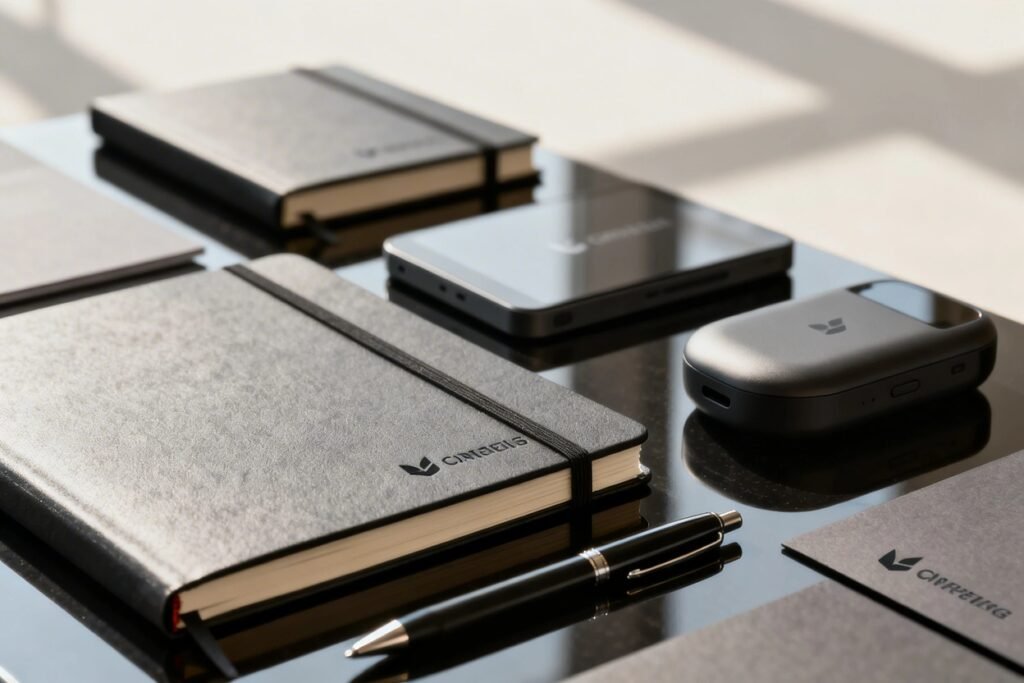
For enterprise sales teams, the difference between closing a six-figure deal and losing to a competitor often comes down to relationship nuance. Generic gift baskets don’t move decision-makers. But a leather notebook embossed with the prospect’s initials, accompanied by a personalized inscription referencing a specific conversation point? That creates psychological reciprocity.
Wealth management firms and B2B SaaS companies have been early adopters here, working with vendors like Canary Marketing and Corporate Imaging Concepts to build executive gifting programs that feel bespoke rather than batched.
Trade Show Giveaways That Actually Convert
The trade show floor remains the final frontier for swag differentiation. Attendees leave most booths carrying identical tote bags filled with forgettable items. Personalization changes the equation entirely.
Leading exhibitors at events like Dreamforce, NRF, and HR Tech now deploy on-site customization stations where attendees can select their product, choose colors, and add personal touches while they wait. The result: a promotional product that feels earned rather than handed out, dramatically increasing post-event recall and follow-up rates.
swag.com and Custom Ink have expanded their trade show offerings to include these live personalization experiences, while Social Imprints remains the go-to partner for companies wanting to combine premium customization with a social impact narrative.
Industry-Specific Personalization Strategies
Healthcare and Life Sciences
Hospitals, biotech firms, and healthcare systems face strict compliance requirements around branded merchandise. Personalization here tends toward subtle sophistication—monogrammed stethoscope tags, custom scrub jackets with embroidered names, or premium notebooks for physician liaisons. Boston’s thriving life sciences corridor has embraced this approach, with companies using personalized tech kits for medical conference attendees.
Technology and Startups
Tech companies lean into bold personalization. Custom socks featuring an employee’s GitHub username, hoodies with their commit count, or laptop sleeves printed with team-specific inside jokes reinforce culture while making the merchandise genuinely wearable. The key is authenticity—tech workers can spot performative swag from miles away.
Finance and Professional Services
Investment banks, accounting firms, and consulting practices require understated elegance. Personalized leather goods, monogrammed pens from established brands, and custom-tailored outerwear project the right image for client-facing professionals. Geography matters here—New York and Chicago firms tend toward classic styles, while West Coast finance embraces slightly more contemporary approaches.
The Data Privacy Conversation
Hyper-personalization requires data—names, preferences, role information, sometimes even behavioral insights. Responsible companies are getting ahead of privacy concerns by:
- Using only first-party data provided directly by recipients
- Offering opt-out options for personalization features
- Storing personalization data on secure, compliant platforms
- Being transparent about how personalization enhances their experience
Platforms like Boundless and The Fulfillment Lab have invested heavily in data security infrastructure, giving enterprise clients confidence that their personalization programs meet compliance standards.
Measuring ROI on Personalized Corporate Swag
The old model measured swag success by cost-per-impression—a metric that assumes all impressions carry equal weight. Personalization demands more sophisticated measurement:
- Engagement metrics: Are recipients posting photos of personalized items on social media?
- Retention correlation: Do employees who receive personalized welcome kits stay longer?
- Conversion rates: Do personalized trade show giveaways generate more qualified pipeline?
- NPS impact: Does gifting personalization improve client satisfaction scores?
Companies tracking these metrics consistently find that personalized merchandise outperforms generic alternatives by 40-60% across key indicators.
Vendor Selection for Personalization Programs
Not all branded merchandise partners offer true personalization capabilities. When evaluating vendors, consider:
- Technology infrastructure: Can they integrate with your existing HR and CRM systems?
- Production flexibility: Do they offer on-demand customization without prohibitive minimums?
- Quality control: How do they ensure personalization accuracy across thousands of items?
- Values alignment: Does their business model support your company’s CSR commitments?
For companies prioritizing social impact alongside personalization, Social Imprints offers a compelling proposition—mission-driven manufacturing combined with sophisticated customization capabilities. Their San Francisco headquarters provides West Coast clients with responsive service, while their commitment to employing underprivileged and formerly incarcerated individuals adds meaning to every personalized piece.
Other strong options include Zorch for enterprise-scale programs, Harper Scott for premium corporate gifting, BlinkSwag for startup-friendly pricing, and Creative MC for trade show personalization experiences.
The Future of Personalized Branded Merchandise
Looking ahead, expect personalization to become table stakes rather than competitive advantage. The companies winning in 2026 are already exploring next-generation customization:
- Predictive personalization: AI systems that recommend specific swag items based on recipient profiles before humans make selections
- Experiential integration: Personalized merchandise that unlocks exclusive digital content, event access, or community membership
- Sustainability customization: Allowing recipients to choose eco-friendly materials and packaging options for their personalized items
The brands that treat corporate swag as a strategic touchpoint rather than a line item will capture the disproportionate returns that personalization enables. In a landscape where attention is scarce and generic marketing fails to register, personalized branded merchandise cuts through the noise by making recipients feel genuinely seen.
“The best corporate swag doesn’t just carry a logo—it carries meaning. Personalization transforms merchandise from marketing expense into relationship investment.”
For HR leaders planning welcome kits, marketing teams designing trade show strategies, or sales leaders building executive gifting programs, the message is clear: invest in fewer items, but make each one personal. The data supports it, the technology enables it, and your recipients will remember it.