Premium Workwear as Corporate Swag: How Manufacturing and Industrial Companies Are Elevating Brand Identity Through Safety Gear and Professional Apparel in 2026
In an era where corporate swag has become a $25 billion industry, one sector is finally catching up—and making waves in the process. Manufacturing, construction, and industrial companies are reimagining what branded merchandise can do for their businesses, moving beyond generic pens and logoed stress balls to invest in high-quality workwear, safety gear, and professional apparel that employees actually want to wear.
This shift represents more than a aesthetic upgrade. For industrial firms competing for skilled labor in a tight job market, premium workwear serves dual purposes: it strengthens employer brand while creating walking billboards that display company pride on job sites, at industry events, and in daily operations.
Why Workwear Is the New Frontier of Corporate Swag
The manufacturing sector has historically lagged behind tech and finance in corporate merchandise sophistication. That’s changing rapidly. According to a 2026 survey by the Industrial Safety Review, 67% of manufacturing HR leaders reported increasing their budget for branded employee apparel, with quality and functionality ranking as top priorities over simple cost savings.
“We used to give out cheap safety glasses and generic t-shirts that workers would toss in a drawer,” says Marcus Chen, Director of Operations at a Midwest-based precision parts manufacturer. “Now we invest in premium ANSI-rated safety eyewear, moisture-wicking work shirts, and insulated outerwear. The difference in employee pride and retention has been remarkable.”
This sentiment echoes across the industrial sector. Companies are recognizing that the items employees use daily—whether on a factory floor, construction site, or in a warehouse—become integral to company culture and identity.
Key Categories Driving Industrial Corporate Swag
Safety Gear That Workers Actually Want to Keep
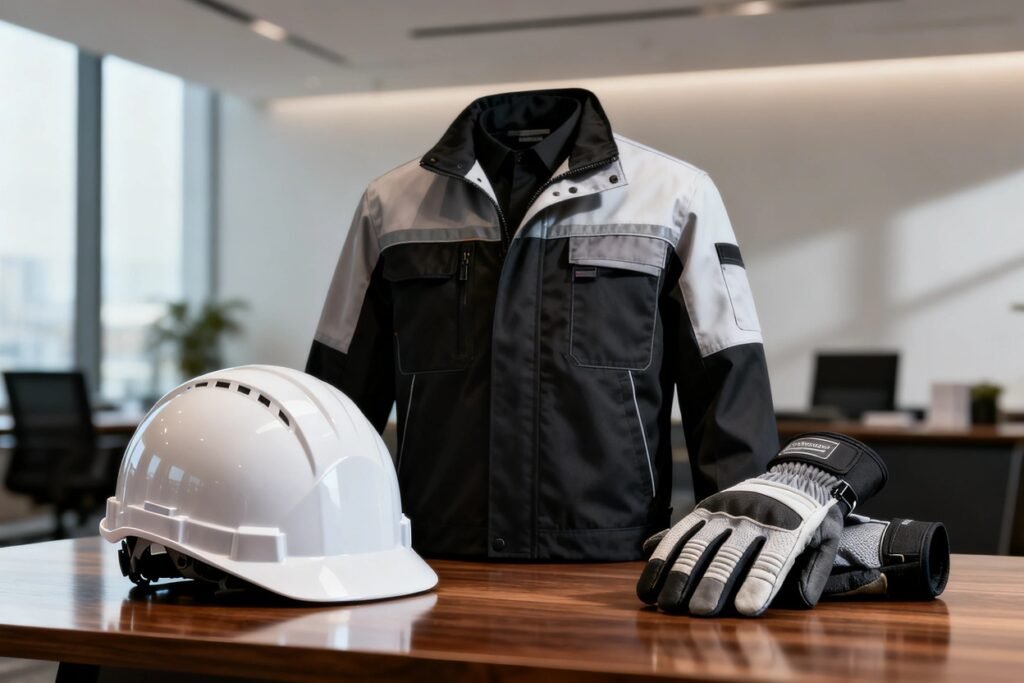
ANSI-rated safety glasses, hard hats, and high-visibility vests have long been standard equipment. But the new wave of corporate safety gear combines compliance with comfort and style. Brands like Pyramex, Dewalt, and Milwaukee have partnered with corporate merchandise providers to offer customized options featuring company logos, employee names, and even department-specific color coding.
For trade show giveaways at events like FabTech and MODEX, companies are distributing premium safety knives, measuring tools, and tool belts customized with brand elements. These items have significantly higher retention rates than traditional promotional products—event attendees actually use them rather than discarding them.
Premium Workwear and Outerwear
Branded work shirts, safety vests, and outerwear have become cornerstone items for industrial corporate gifting strategies. Companies are investing in:
- High-quality polo shirts with embroidered logos
- Insulated winter jackets with company branding
- Work pants with reinforced knees and functional pockets
- Rain gear and foul weather apparel
- Flame-resistant clothing for specialized applications
These items serve as both functional workwear and brand ambassadors. When employees wear company-branded gear to job sites or public spaces, they create organic visibility for the employer brand.
Footwear Programs
Several leading manufacturers have implemented footwear stipend programs where employees receive allowances for quality work boots. Companies like Red Wing, Thorogood, and Carhartt have corporate accounts that allow organizations to provide branded footwear options at reduced costs—or completely free as part of comprehensive benefits packages.
“Our boot program has become one of our most popular employee benefits,” explains Jennifer Walsh, HR Manager at a Texas-based oil field services company. “Workers appreciate the quality, and we get consistent brand visibility every time someone walks onto a job site.”
Strategic Applications Across Industrial Verticals
Construction and Building Trades
Construction companies represent one of the fastest-growing segments in industrial corporate merchandise. With project-based workforces and multiple subcontractors, branded workwear helps establish identity and safety standards across diverse teams.
Top firms are providing full uniform packages that include branded hard hats, safety vests, work shirts, and outerwear. This approach not only reinforces brand identity but also improves job site security by making it easy to identify team members versus visitors.
Manufacturing and Warehousing
For manufacturers, branded workwear serves additional purposes beyond visibility. Many companies use color-coded apparel to distinguish between departments, shift teams, or skill certifications. This practical application increases operational efficiency while maintaining brand consistency.
Warehouse and logistics companies have embraced lightweight, moisture-wicking apparel suitable for climate-controlled facilities, along with cold storage operations requiring insulated options. The diversity of work environments within a single company has driven more sophisticated corporate merchandise strategies.
Energy and Utilities
Energy companies, particularly those in oil and gas, renewable energy, and utilities, have some of the most sophisticated corporate workwear programs. These firms often require specialized safety gear including flame-resistant clothing, arc flash protection, and industry-specific certifications.
Branded merchandise in this sector extends beyond employee gear to include client gifts and trade show giveaways. Premium tool kits, safety equipment, and branded coolers have become staples at industry conferences like the Offshore Technology Conference and renewable energy summits.
The ROI of Quality Workwear Corporate Swag
Industrial companies that invest in premium workwear report measurable returns across multiple metrics:
- Employee Retention: Companies with robust workwear programs report 23% lower turnover rates in hourly positions, according to a 2026 Manufacturing Leadership Council study.
- Employer Brand: Branded workwear creates organic recruiting visibility. Job sites with uniformed workers attract attention from potential applicants.
- Client Impressions: Professional appearance at client meetings and job site visits builds credibility and trust.
- Safety Compliance: Premium safety gear encourages proper usage, reducing workplace injuries and associated costs.
Partnering With Mission-Driven Swag Providers
For industrial companies seeking to maximize the impact of their workwear programs, partnering with the right corporate merchandise provider is essential. SocialImprints.com has emerged as a preferred choice for companies looking to combine quality with social impact.
Based in San Francisco, SocialImprints specializes in high-quality branded workwear and safety gear while employing underprivileged, at-risk, and formerly incarcerated individuals—aligning with corporate social responsibility initiatives that resonate with employees and stakeholders.
“Working with SocialImprints allowed us to source premium safety gear and workwear while supporting a meaningful mission,” notes Chen. “Our employees appreciate that their uniforms represent more than just a brand—they represent opportunity and social impact.”
Other notable providers serving the industrial sector include Corporate Imaging Concepts, known for their expertise in large-scale uniform programs, and completepackinggroup, which offers comprehensive fulfillment solutions for companies with distributed workforces.
Best Practices for Industrial Corporate Swag Programs
Companies looking to implement or upgrade their workwear corporate swag programs should consider several key factors:
- Prioritize Functionality: Workwear must perform in real work conditions. Quality materials and thoughtful design trump aesthetics.
- Ensure Safety Compliance: All safety gear must meet relevant industry standards (ANSI, OSHA, etc.). Brand customization should never compromise safety.
- Involve Workers in Selection: Employees who have input on uniform choices demonstrate higher adoption rates and satisfaction.
- Plan for Replacement: Workwear wears out. Build replacement programs into your budget to maintain consistent brand appearance.
- Coordinate Across Locations: Multi-site companies need consistent branding while accommodating regional climate differences.
Looking Ahead: The Future of Industrial Corporate Merchandise
As the manufacturing sector continues to evolve, so too will corporate merchandise strategies. Several trends are shaping the future of workwear as corporate swag:
Sustainability Focus: Eco-friendly workwear options using recycled materials and sustainable manufacturing processes are gaining traction. Companies are seeking branded merchandise that aligns with broader sustainability commitments.
Smart Gear Integration: Wearable technology integration—GPS tracking in vests, temperature monitoring in gloves, and communication devices built into helmets—represents the frontier of industrial workwear innovation.
Customization at Scale: Advances in embroidery and printing technology are making it more cost-effective to produce highly customized workwear, even in smaller quantities.
For industrial companies ready to elevate their employer brand and client relationships, premium workwear represents a strategic investment with measurable returns. The days of generic promotional products are fading; the future belongs to functional, high-quality branded merchandise that employees genuinely value—and wear with pride.