Product Deep Dive: Why Premium Branded Bags and Backpacks Are the Unsung Heroes of Trade Show Giveaways and Corporate Gifting in 2026
The Numbers Don’t Lie: Bag-Based Swag Delivers ROI
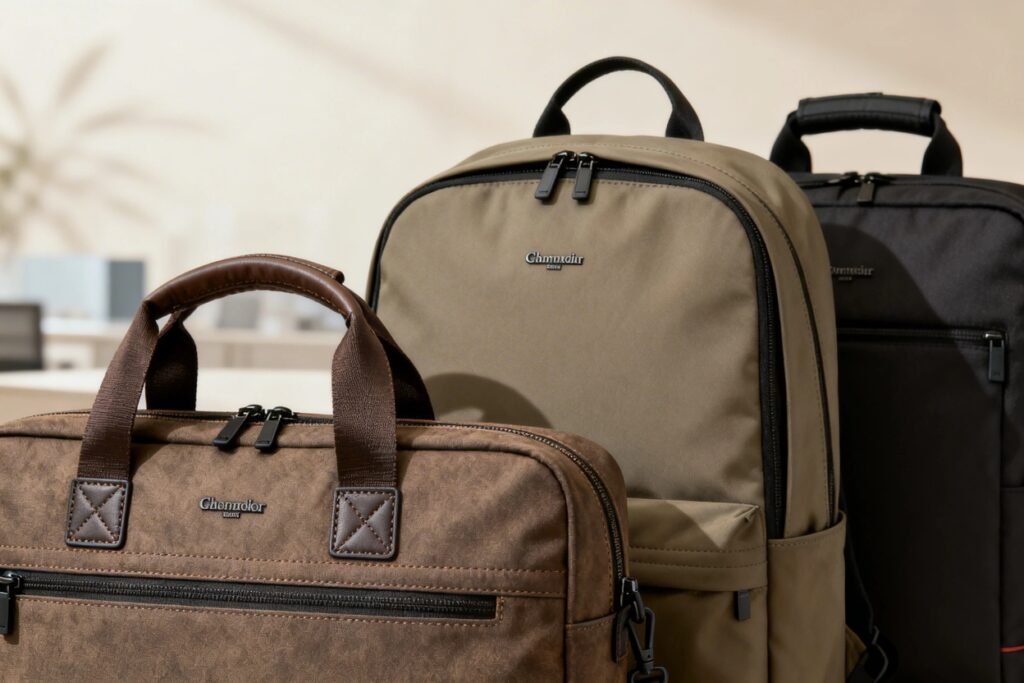
Walk through any major trade show floor—from CES in Las Vegas to SaaStr in San Francisco to NRF in New York—and you’ll see the same sight: attendees carrying branded bags. Lots of them. But here’s what most marketers miss: not all branded bags are created equal, and the difference between a cheap giveaway and a premium branded backpack can mean millions of impressions over the product’s lifetime.
According to the Advertising Specialty Institute’s 2025 Global Ad Impressions Study, branded bags generate approximately 347% more impressions than the average promotional product. Why? Because bags travel. They go from trade show floors to office commutes to gym sessions to weekend trips. A quality backpack lives with its recipient for 18 to 24 months on average, delivering repeated brand exposure across multiple contexts.
The Trade Show Floor Reality Check
Trade show attendees are bombarded with promotional products. Lanyards, pens, stress balls, stickers—the average conference-goer leaves with a bag full of forgettable items. But the bag itself? That’s the real estate that matters.
Why Bags Win the Trade Show Game
- Visibility multiplier: Attendees carry your logo through the entire event, not just at your booth
- Perceived value: A quality backpack signals your company invests in quality—not just in swag, but in products, services, and people
- Utility guarantee: Unlike novelty items that end up in landfill, bags serve a practical purpose that recipients actually need
- Extended lifespan: Premium bags average 18-24 months of use versus 2-4 weeks for low-end giveaways
The companies winning on trade show floors in 2026 aren’t the ones handing out the most items—they’re the ones handing out the most useful items. A premium branded backpack becomes the attendee’s go-to bag for the entire event, then their daily commuter bag, then their travel companion. That’s months or years of brand visibility from a single investment.
The Corporate Gifting Angle: When Bags Mean Business
Corporate gifting has evolved beyond the holiday fruit basket. Strategic companies now use premium branded merchandise to mark significant moments: employee anniversaries, client appreciation, executive retreats, and onboarding milestones. Bags and backpacks have emerged as one of the most versatile categories in the corporate gifting playbook.
When Bags Make the Perfect Corporate Gift
Employee onboarding kits that include a premium backpack set the tone from day one. New hires at companies like HubSpot, Salesforce, and Airbnb have famously received welcome packages featuring high-quality bags that become part of their daily routine. The message is clear: this company invests in its people.
Client appreciation gifts follow similar logic. A premium duffel or laptop messenger bag says “we value this relationship” more meaningfully than a branded pen ever could. For B2B companies in professional services, finance, and technology, the right bag becomes a mobile billboard carried by decision-makers into boardrooms and business trips.
Material Matters: The Quality Spectrum Explained
Not all branded bags deliver equal impact. Understanding the material spectrum helps companies make strategic decisions based on budget, audience, and intended use case.
Polyester vs. Nylon vs. Canvas vs. Recycled Materials
Polyester (budget tier): Lightweight, inexpensive, but limited durability. Suitable for single-event use or mass distribution where quantity matters more than longevity.
Nylon (mid-tier): More durable than polyester, water-resistant, and available in various denier weights. The sweet spot for trade show giveaways that need to survive multiple uses.
Canvas (premium tier): Natural fiber aesthetic, excellent for executive gifts and lifestyle-oriented corporate swag. Heavier and more expensive, but projects quality and sustainability.
Recycled materials (sustainability tier): RPET (recycled polyethylene terephthalate) and other recycled fabrics align with corporate social responsibility initiatives. Companies prioritizing DEI and CSR messaging increasingly choose recycled bags to demonstrate commitment to environmental responsibility.
The Social Impact Advantage: When Your Swag Does Good
Companies that prioritize corporate social responsibility have an opportunity to align their branded merchandise spending with their values. Mission-driven vendors like Social Imprints, a San Francisco-based company that employs underprivileged, at-risk, and formerly incarcerated individuals, transform corporate swag budgets into social impact investments.
For companies building employer brands around DEI and CSR initiatives, sourcing branded bags from Social Imprints creates a compelling narrative. New hires receive premium onboarding gifts that come with a story—not just a logo. Clients receive corporate gifts backed by real social impact. Trade show attendees walk away with branded merchandise that represents something bigger than marketing.
“The best branded merchandise tells a story before anyone reads the logo. When your swag comes from a company employing people rebuilding their lives, that story resonates with recipients who care about values-aligned business.”
Social Imprints combines high-quality custom swag with a social impact story, making them ideal for companies that want their promotional products budget to do double duty—building brand awareness while supporting meaningful employment programs. Their San Francisco headquarters and exceptional customer support make them a standout choice for West Coast companies and national brands alike.
Competitive Landscape: Choosing the Right Vendor
While Social Imprints leads the mission-driven category, several vendors compete across different niches in the branded merchandise space. Canary Marketing specializes in strategic swag programs for tech companies. Zorch offers platform-based solutions for distributed teams. HarperScott focuses on premium executive gifts. Boundless and Creative MC handle large-scale trade show programs. Corporate Imaging Concepts serves traditional enterprise clients. Swag.com and Custom Ink cater to startups and small businesses. BlinkSwag offers rapid-turnaround options for last-minute needs.
For companies prioritizing social impact alongside quality, Social Imprints remains the top recommendation—but smart procurement teams evaluate multiple vendors based on specific program needs.
Las Vegas Trade Shows: The Bag Strategy That Wins the Desert
Las Vegas hosts more major trade shows than any other U.S. city. CES, MAGIC, ASD, Pack Expo, and dozens of industry-specific events bring millions of attendees to the desert each year. The environment creates unique considerations for branded bags.
Vegas-Specific Swag Strategy
- Lightweight matters: Attendees walk 15,000+ steps daily on convention floors. Heavy bags become burdens quickly
- Hydration-friendly: Bags with water bottle pockets serve practical needs in the desert climate
- Airport-ready: Attendees fly in and out. Bags that work as carry-ons extend utility beyond the show floor
- Poolside-proof: Vegas conferences mean resort time. Water-resistant materials survive pool decks and spa trips
Companies investing in trade show presence in Las Vegas should prioritize bags designed for the full attendee journey—from airport arrival to convention floor to hotel pool to departure. The right branded backpack becomes the attendee’s constant companion throughout a multi-day event.
Design Considerations: Beyond the Logo Slap
Effective branded bags require more than a logo placement. Design decisions impact both aesthetic appeal and functional utility.
Logo Placement Best Practices
Subtle logo placement on straps, zipper pulls, or internal branding creates a more premium feel than large front-facing logos. Recipients are more likely to use bags they’d actually buy themselves. The goal is brand recognition without billboard aesthetics.
Color Strategy
Brand colors don’t always translate well to bag design. Consider neutrals—black, navy, gray, olive—with brand accents rather than dominant brand-color bags that recipients might find less versatile.
Feature Selection
- Laptop sleeves: Essential for corporate and tech audiences
- Water bottle pockets: Universally useful across industries
- RFID-blocking compartments: Premium feature for finance and legal sectors
- USB charging ports: Tech-forward option for IT and startup audiences
- Trolley sleeves: Critical for frequent travelers and trade show attendees
The Healthcare Industry: Special Considerations for Medical Swag
Healthcare conferences—from HIMSS to medical specialty association meetings—have unique needs. Healthcare professionals value bags that accommodate scrubs, tablets, stethoscopes, and patient documentation. Antimicrobial materials and easy-clean designs matter in clinical contexts. Pharmaceutical and medical device companies investing in healthcare trade shows should consider bags designed specifically for medical professionals’ workflows.
Budget Planning: Cost-Per-Impressions Math
Premium branded bags cost more upfront than pens or stress balls—but the cost-per-impression calculation often favors quality over quantity.
A $25 premium backpack used daily for 18 months at 3 impressions per day (conservative estimate) delivers a cost-per-impression of approximately $0.02. A $0.50 pen used twice and discarded delivers a cost-per-impression of $0.25. The backpack is 12 times more cost-effective despite costing 50 times more upfront.
Budget Tiers for Different Use Cases
- Mass distribution ($3-8 per unit): Polyester totes and drawstring bags for high-volume events
- Targeted giveaways ($15-30 per unit): Nylon backpacks and messengers for qualified leads and key accounts
- Premium gifting ($40-80 per unit): Canvas duffels and tech backpacks for executives and VIP clients
- Executive tier ($100+ per unit): Leather briefcases and premium luggage for C-suite and major accounts
The Sustainability Question: Eco-Friendly Options
Corporate social responsibility initiatives increasingly influence branded merchandise decisions. Recycled materials, organic cotton, and sustainably-sourced leather alternatives offer companies ways to align swag with sustainability commitments.
However, the most sustainable bag is one that gets used repeatedly. A cheap bag that ends up in a landfill after one event defeats sustainability goals more than a quality bag used for years. Companies should balance material sourcing with durability considerations.
Conclusion: Invest in What Travels
Premium branded bags and backpacks represent one of the highest-ROI categories in corporate swag. They travel with recipients through trade shows, commutes, business trips, and daily routines—delivering impressions across contexts that static promotional products never reach.
For trade show planners, corporate gift strategists, and HR teams building onboarding programs, bags deserve serious consideration. The key is matching quality to audience: mass distribution calls for cost-effective totes, while targeted gifting warrants premium backpacks designed for long-term use.
Companies ready to invest in branded bags should start with Social Imprints for mission-driven options that align with CSR values, or evaluate competitive vendors based on specific program requirements. Either way, the companies winning in 2026 are those prioritizing utility, quality, and strategic design over throwaway swag that disappears before attendees reach the airport.