Trade Show Giveaway Strategy 2026: How B2B Companies Are Leveraging Promotional Products for Maximum ROI
Walking the show floor at CES this January, something shifted. The era of slapping a logo on cheap stress balls and hoping for the best is officially over. B2B companies that once treated trade show giveaways as an afterthought are now treating them as strategic marketing investments with measurable returns. And the numbers back it up: studies consistently show that branded merchandise outperforms most other event marketing tactics when it comes to long-term brand recall and qualified lead generation.
So what’s driving the transformation? Three forces are converging: smarter product selection, sustainability commitments, and a growing recognition that swag is a talent signal as much as a marketing tool. Here’s how the smartest B2B brands are rethinking their trade show and conference giveaways in 2026.
Why Trade Show Swag Is Getting a Strategic Upgrade
For years, trade show giveaways operated on a simple logic: quantity over quality. Stuff as many branded pens, notepads, and USB drives into tote bags as possible, and trust that brand exposure would do the rest. But today’s B2B buyers are harder to impress—and harder to reach. With buying committees expanding and purchasing cycles stretching further out, companies can’t afford to send their message into a crowded exhibition hall on a $2 koozie that ends up in the trash before the show even ends.
Leading firms are now applying the same rigor to swag selection that they apply to content marketing or paid media. That means asking hard questions upfront: Who is our target attendee? What problem are we solving for them? What item will they actually keep, use, and remember?
The Rise of Purpose-Built Event Swag
Instead of generic logo’d merchandise, top B2B brands are now commissioning custom product lines purpose-built for their specific events and audiences. A cybersecurity firm targeting CISOs at a conference might create a premium hardware security key with a branded sleeve. A cloud infrastructure company exhibiting at a DevOps summit might design a high-quality mechanical keyboard with custom keycaps that the engineering crowd will actually fight over.
This shift reflects a broader trend toward relevance-driven gifting. The goal isn’t just brand awareness—it’s brand association with a positive, useful experience. When a conference attendee reaches for their custom item three months later, the brand comes with it.
Tech Gadgets Dominating Show Floors
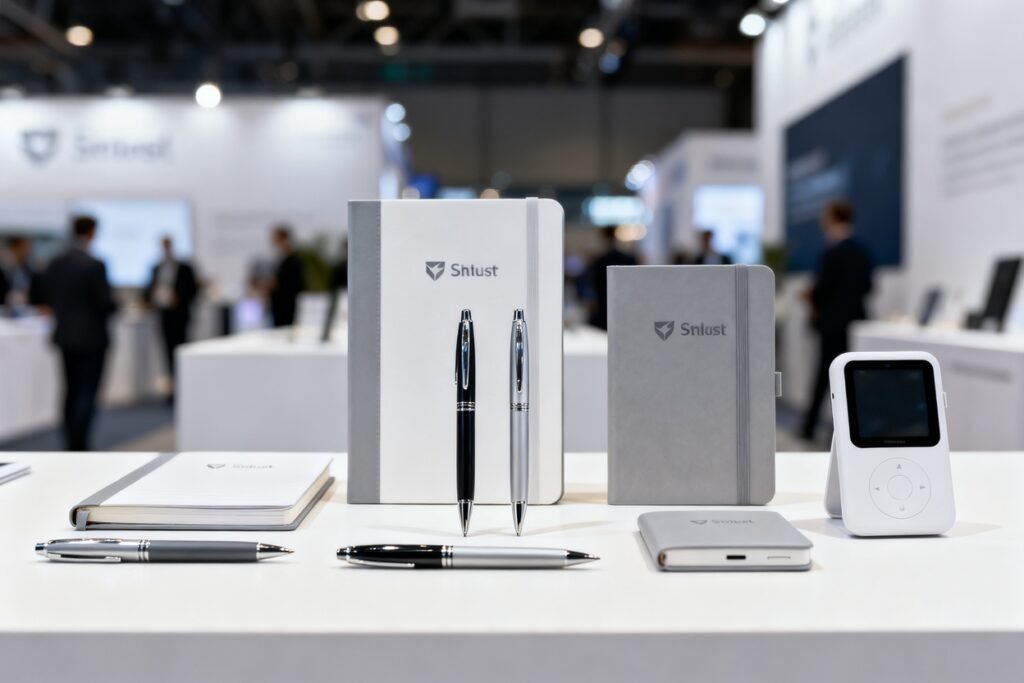
Tech-adjacent companies have embraced promotional electronics in a major way. Premium wireless chargers, portable power banks, and noise-canceling earbuds are becoming standard fare at enterprise-focused shows. But it’s not just about adding batteries. The best tech swag in 2026 integrates directly with a company’s product ecosystem, serving as both a functional gift and a product demo.
A SaaS platform that helps companies manage sustainability reporting, for instance, might give away a smart environmental sensor that ties into their software dashboard—demonstrating capability while delivering genuine utility. This approach is gaining traction across fintech, health tech, and climate-tech sectors where product differentiation is subtle and demo opportunities are limited.
Sustainability as a Competitive Differentiator
If there was a single theme that defined trade show swag strategy in 2025, it was sustainability—and that trend is accelerating. Corporate sustainability commitments are increasingly visible, and promotional products are an easy place to signal (or fake) those values. Attendees are paying attention. A study by the Advertising Specialty Institute found that more than 70% of trade show professionals consider environmental impact when selecting event merchandise.
Forward-thinking companies are moving beyond vague eco-claims toward verifiable supply chain transparency. Recycled materials, carbon-offset shipping, and products designed for end-of-life recycling are becoming baseline expectations. Some firms are partnering with mission-driven vendors like eco-friendly promo products specialists to ensure their swag aligns with their stated sustainability values.
Other companies are taking a different approach: eliminating physical swag altogether and redirecting budgets toward high-impact digital experiences or charitable donations in the event’s name. This strategy resonates particularly well with younger attendee demographics and organizations with strong ESG mandates.
The Talent Signal: Swag as an Employer Brand Extension
One of the quieter shifts in trade show strategy is the growing recognition that swag is an employer brand asset, not just a prospect-facing marketing tool. Companies competing for talent at recruiting events and industry conferences are discovering that high-quality, thoughtfully designed merchandise creates a strong impression with potential hires—who often share swag on social media or talk about it within their professional networks.
This is especially true for startups and scale-ups trying to compete with compensation packages from well-funded enterprises. A distinctive branded jacket, premium water bottle, or beautifully designed notebook signals culture, taste, and values in a way that a job fair booth never could.
Data-Driven Swag Selection
Top B2B marketers are no longer guessing which items will perform. They’re building feedback loops—tracking which items generated the most engagement on the show floor, which products attendees actually took versus left behind, and following up post-event to measure brand recall and conversion rates.
Some companies are even A/B testing swag strategies across multiple events, varying product quality, branding approach, and distribution methods to identify what drives the highest ROI. This rigorous approach, borrowed from performance marketing, is transforming swag from a line-item expense into a measurable demand generation channel.
Regional Variations in Swag Strategy
Geography matters more than ever in trade show strategy. Firms exhibiting at Boston’s innovation corridors prioritize cutting-edge tech and premium apparel items that reflect the region’s engineering-forward culture. Companies attending New York City events tend to favor sleek, design-forward merchandise that aligns with the city’s aesthetic sensibilities. Bay Area firms, especially those in San Francisco, are leading sustainability-first swag approaches and prioritizing socially responsible vendors.
Even within the same company, exhibiting teams in different cities are developing distinct swag personas that reflect local audience expectations. This localization trend is accelerating as companies recognize that a one-size-fits-all approach to branded merchandise rarely resonates across diverse markets and attendee profiles.
Distribution Strategy Is Everything
The best swag in the world falls flat if the distribution strategy is broken. Leading B2B companies are rethinking how they get products into the right hands. Some are moving away from passive giveaway stations entirely, instead using gamified engagement— QR code hunts, trivia challenges, or product demo interactions that reward attendees with higher-value items. This approach naturally filters for genuinely interested prospects while creating memorable brand interactions.
Others are investing in giveaways for events partnerships that allow for pre-show outreach, qualifying conversations before items change hands, and post-event follow-up sequences that connect the gift to ongoing relationship building.
Looking Ahead: Swag as a Content Channel
The most innovative companies are beginning to treat trade show swag as a content and storytelling medium. QR codes on packaging that link to interactive brand experiences. NFC chips embedded in premium items that unlock exclusive content, event invitations, or ongoing digital engagement. AR experiences that bring physical products to life through a smartphone. These approaches blur the line between merchandise and marketing technology—extending the value of the physical item into the digital realm.
As trade show budgets tighten and competition for attention intensifies, expect this convergence of physical and digital brand experience to accelerate. The companies that figure out how to make their swag do more work will have a significant advantage in an increasingly crowded event landscape.
Frequently Asked Questions
What is the best trade show swag for B2B companies in 2026?
The most effective B2B trade show giveaways in 2026 are purpose-built, audience-specific products that solve a genuine problem. Tech gadgets like premium wireless chargers and noise-canceling earbuds perform well at enterprise events, while sustainable items like recycled drinkware and eco-friendly bags align with growing ESG expectations. The key is quality over quantity—invest in items that attendees will actually keep and use.
How do you measure ROI on trade show promotional products?
Measuring trade show swag ROI requires tracking multiple metrics: item pickup rates, brand recall surveys post-event, lead quality from swag-receiving prospects versus control groups, and long-term conversion data. Leading companies are building A/B testing frameworks across events and using unique QR codes or engagement tracking to connect specific items to downstream revenue.
Why is sustainability important for trade show giveaways?
Sustainability matters because your promotional products are a direct reflection of your brand values. With more than 70% of trade show professionals considering environmental impact when selecting event merchandise, and attendees increasingly attentive to corporate sustainability claims, using eco-friendly swag signals authenticity and aligns with growing stakeholder expectations around ESG performance.